
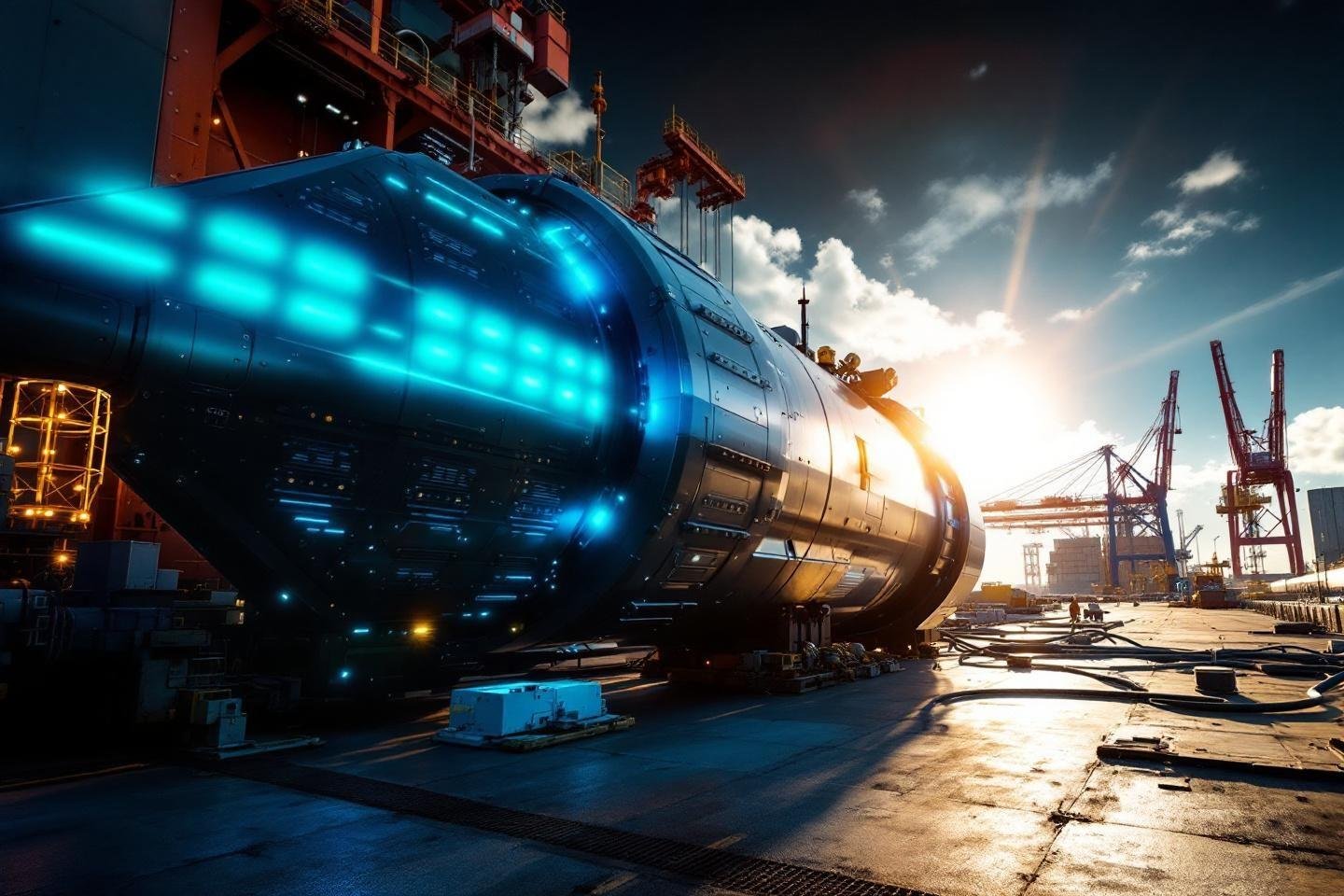
Washington’s naval forces recently launched a formidable underwater platform that signals a decisive shift in maritime power dynamics. The USS Massachusetts, a nuclear-powered submarine displacing 10,200 tons, emerges as America’s technological answer to intensifying geopolitical rivalries. This Virginia-class Block V vessel completed successful Atlantic sea trials, showcasing unprecedented stealth characteristics and combat versatility. The deployment represents more than engineering prowess; it embodies a calculated strategy to maintain naval dominance amid rising challenges from Beijing and Moscow. With 145 crew members operating sophisticated combat systems, this underwater giant redefines what modern naval warfare capabilities can achieve beneath contested ocean surfaces.
Revolutionary design features that separate Block V from previous generations
The Massachusetts stretches 140.5 meters in length with a 10.3-meter beam, housing a nuclear propulsion system that enables months-long deployments without surface exposure. This operational endurance proves critical for intelligence missions in hostile waters where detection could compromise national security objectives. The submarine achieves speeds exceeding 46 kilometers per hour while maintaining exceptional acoustic stealth through advanced dampening technologies. These specifications position the vessel as a formidable asset for operations requiring both speed and invisibility.
What truly distinguishes this Block V variant involves the Virginia Payload Module, a 25-meter extension that fundamentally transforms mission capabilities. This modular section accommodates up to 40 Tomahawk cruise missiles, quadrupling the strike capacity compared to earlier Block III submarines. The VPM design philosophy allows integration of unmanned underwater vehicles and classified payloads, creating a versatile platform adaptable to evolving tactical requirements. Such flexibility mirrors how modern defense strategies emphasize multi-domain operations rather than single-purpose platforms.
| Characteristic | Block V Configuration | Earlier Block III |
|---|---|---|
| Overall length | 140.5 meters | 115 meters |
| Total displacement | 10,200 tons | 7,900 tons |
| Tomahawk missile capacity | 40 weapons | 12 weapons |
| Crew complement | 145 sailors | 134 sailors |
Sonar systems integrated into the Massachusetts represent decades of acoustic research, enabling passive detection of adversary vessels at considerable distances while remaining undetectable. The submarine’s combat systems architecture processes vast quantities of sensor data in real-time, providing commanders with comprehensive situational awareness. This technological integration ensures American crews maintain tactical advantages even when operating in contested maritime zones where adversaries deploy increasingly sophisticated detection networks.
Strategic positioning against emerging maritime competitors
Beijing’s accelerated naval expansion, particularly its Type 093B submarine program, directly challenges American maritime supremacy in Pacific waters. China’s construction pace outstrips Western production rates, creating numerical advantages that concern Pentagon strategists. Meanwhile, Moscow fields Yasen-M class submarines equipped with formidable weapons systems despite acoustic signatures inferior to Virginia-class vessels. This competitive environment demands Washington maintain qualitative superiority when quantitative parity becomes increasingly difficult.
The Massachusetts deployment provides American commanders with flexible response options across multiple scenarios. Intelligence collection missions benefit from the submarine’s extended operational range and advanced sensor suite. Special operations support capabilities allow insertion of personnel in denied areas where conventional forces cannot operate. Precision strike missions against high-value targets become feasible with the expanded Tomahawk arsenal, providing policymakers with credible military options short of full-scale conflict.
International maritime law establishes frameworks for submarine operations, yet gray zone activities blur traditional distinctions between peacetime activities and hostile actions. The Massachusetts offers capabilities particularly suited for these ambiguous situations where diplomatic tensions require careful military positioning. This versatility proves invaluable in regions like the South China Sea where territorial disputes intersect with freedom of navigation operations. European allies including France continue developing Barracuda-class submarines, though production volumes remain modest compared to American programs.
Industrial capacity and technological collaboration driving innovation
General Dynamics Electric Boat partnered with Newport News Shipbuilding to construct the Massachusetts, leveraging specialized manufacturing expertise accumulated over decades. This collaboration ensures consistent quality standards across the Virginia-class program while maintaining production schedules despite complex construction requirements. The submarine represents the 25th vessel in its class, with Virginia facilities contributing the 12th unit to the fleet. Such sustained production demonstrates American industrial capacity that few competitors can match.
Defense investment priorities reflect strategic assessments of future security environments. The Virginia program receives substantial budgetary resources based on projections that underwater platforms will remain critical for power projection through 2050 and beyond. Key innovations distinguishing Block V submarines include :
- Enhanced payload flexibility through modular Virginia Payload Module integration
- Advanced combat systems enabling seamless multi-domain coordination
- Improved acoustic signature reduction achieving superior stealth characteristics
- Modular architecture facilitating future technology upgrades without extensive redesign
- Optimized reactor design extending operational range between maintenance periods
Manufacturing complexity requires thousands of specialized workers possessing skills that take years to develop. Supply chain management involves coordinating components from hundreds of subcontractors across multiple states. This industrial ecosystem represents strategic infrastructure that competitors struggle to replicate despite substantial investments. The Massachusetts exemplifies how sustained technological development yields capabilities that maintain American naval superiority despite numerical disadvantages in certain regions.
Implications for future naval operations and deterrence strategies
The Massachusetts will officially join operational fleets by early 2026, reinforcing American nuclear submarine forces against regional adversaries. China’s construction acceleration poses long-term challenges that require sustained American investment in both platforms and personnel. Russia maintains fewer submarines than Soviet-era peaks, yet remaining vessels carry potent weapons systems capable of threatening carrier strike groups. This evolving threat landscape demands platforms like the Massachusetts that combine stealth, firepower and operational flexibility.
Submarine warfare demands exceptional psychological resilience from crews operating in confined spaces for extended periods. Training programs prepare sailors for combat scenarios ranging from intelligence collection to direct engagement with adversary forces. The mental demands parallel complex strategic challenges where positioning and timing prove as important as raw capabilities. Successful missions require coordination between sensor operators, weapons specialists and command personnel operating sophisticated systems under pressure.
The 10,200-ton Virginia-class submarine represents Washington’s commitment to preserving naval supremacy through continuous technological innovation. As geopolitical tensions escalate across multiple theaters, platforms like the Massachusetts provide policymakers with credible deterrent capabilities. This underwater giant ensures American interests remain protected beneath contested ocean surfaces where strategic competition intensifies among powers seeking maritime influence. The vessel symbolizes how investment in advanced capabilities maintains balance in an increasingly multipolar security environment where technological edges separate dominant forces from regional players.