
The contemporary battlefield has transformed dramatically as inexpensive drone technology threatens traditional military infrastructure. Improvised unmanned platforms now challenge expensive defense equipment with alarming effectiveness. Recent combat zones across Ukraine, Yemen, and Gaza have demonstrated how asymmetric warfare tactics exploit vulnerabilities in conventional air defense architectures. These developments prompted the Pentagon to authorize a remarkable $5.04 billion procurement initiative for Raytheon’s specialized interceptor solution. This investment addresses what military strategists identify as the most critical vulnerability facing modern armed forces worldwide.
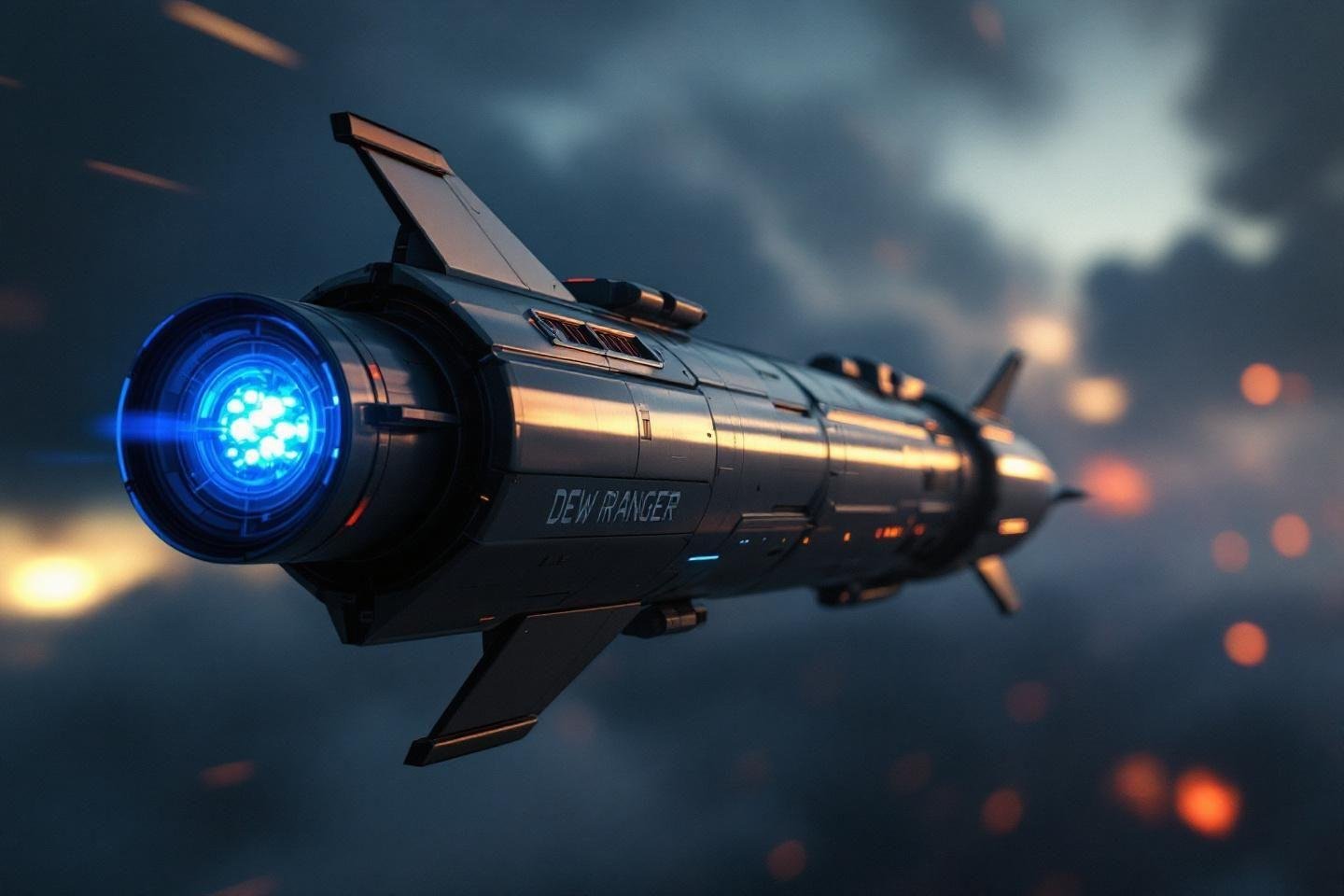
The Coyote system represents a fundamental departure from traditional missile defense philosophy. Rather than deploying multi-million-dollar interceptors against low-cost threats, this compact rail-launched weapon provides proportional response capabilities. The miniaturized turbine propulsion combines with rocket booster technology to create unprecedented deployment speed. Combat validation across multiple operational theaters confirms the platform’s effectiveness against both isolated aerial threats and coordinated swarm formations that overwhelm conventional defenses.
How emerging technologies reshape military defense paradigms
Hostile actors increasingly leverage commercially available drone platforms to conduct military operations at minimal financial investment. A rudimentary quadcopter costing several hundred dollars can disable armored vehicles valued at millions. This economic disparity creates unsustainable defense equations for traditional military powers. The proliferation extends beyond state adversaries to include non-governmental organizations and transnational groups acquiring sophisticated capabilities through consumer markets.
Iran and Russia have showcased advanced unmanned systems in recent conflicts, demonstrating autonomous navigation, precision targeting, and electronic warfare integration. These developments signal a broader transformation where technological accessibility equalizes force projection capabilities. The Pentagon’s substantial financial commitment acknowledges this strategic shift requires dedicated counter-systems rather than adapting existing air defense platforms designed for conventional aircraft and ballistic missiles.
Future threat scenarios present even greater challenges for defensive planners. Military analysts anticipate several emerging attack vectors that current systems struggle to address :
- Synchronized swarm operations deploying dozens of coordinated platforms simultaneously
- Autonomous kamikaze units operating without operator control or communication
- Micro-drone infiltration systems evading traditional radar detection
- Hybrid electronic packages disrupting battlefield communication networks
The Coyote architecture specifically addresses these anticipated threat evolutions through modular design allowing rapid capability upgrades. The procurement timeline extending through September 2033 ensures continuous technological refinement as adversary tactics evolve. Supervision from Redstone Arsenal in Alabama guarantees rigorous development oversight throughout this decade-long modernization initiative.
Technical capabilities enabling superior operational effectiveness
What distinguishes this interceptor from conventional air defense missiles is its dual engagement methodology. Operators select between kinetic destruction through direct impact or non-kinetic neutralization employing signal jamming and directed energy technologies. This flexibility allows proportional responses based on specific threat assessments and rules of engagement. A hostile reconnaissance drone might warrant electronic disruption rather than physical destruction in certain operational contexts.
The system integrates within a comprehensive layered defense network incorporating multiple detection and interdiction components. M-LIDS radar technology provides initial threat identification, while advanced optical sensors enable precise target discrimination. Artificial intelligence algorithms fuse data streams from multiple sources, creating automated engagement protocols that human operators cannot match for speed. This capability allows simultaneous prosecution of numerous incoming threats that would saturate conventional defense systems.
| Performance parameter | Operational specification |
|---|---|
| Maximum engagement range | 15-20 kilometers effective distance |
| Altitude capability | Up to 6,000 meters operational ceiling |
| Velocity performance | Supersonic speeds exceeding Mach 1.5 |
| Estimated unit cost | $100,000-150,000 per interceptor |
| Platform integration | Mobile Stryker vehicles and fixed installations |
The compact dimensions enable deployment across diverse platform configurations. Mobile launchers mounted on Stryker armored vehicles provide tactical flexibility, while fixed installations protect critical infrastructure and forward operating bases. Each launcher accommodates multiple interceptors, creating rapid-response capacity that traditional heavy systems cannot deliver. Plans call for equipping 1,500 American military vehicles with integrated anti-drone shields by 2027, demonstrating comprehensive force-wide implementation.
International implications for defense cooperation and capability gaps
European military establishments currently lag American anti-drone capabilities despite pursuing indigenous development programs. France evaluates the Sky Warden platform alongside upgraded Proteus systems and experimental Parade technologies. Germany collaborates with Rheinmetall on the LVS NNbS initiative, while Israeli defense contractors market Iron Beam and Sky Sonic solutions internationally. However, none achieve the integrated modularity and economic efficiency that characterizes the Coyote architecture.
This capability disparity may reshape alliance structures and cooperation agreements as nations seek access to proven counter-drone technologies. The exclusive procurement contract awarded to Raytheon Missiles & Defense in Tucson, Arizona, encountered minimal competitive bidding, suggesting few alternative solutions meet Pentagon requirements. The comprehensive package includes mobile and fixed launchers, multiple interceptor variants, high-frequency Ku-band radar systems, logistical support infrastructure, and future adaptation capabilities.
The network-centric warfare integration positions American forces to address evolving challenges through automated, rapid responses that human operators cannot achieve manually. As drone technology becomes increasingly accessible globally, the advantage provided by sophisticated counter-systems becomes strategically decisive. Nations lacking equivalent defensive capabilities face vulnerability to asymmetric attacks that can neutralize conventional military advantages through attrition of expensive equipment by inexpensive platforms.