
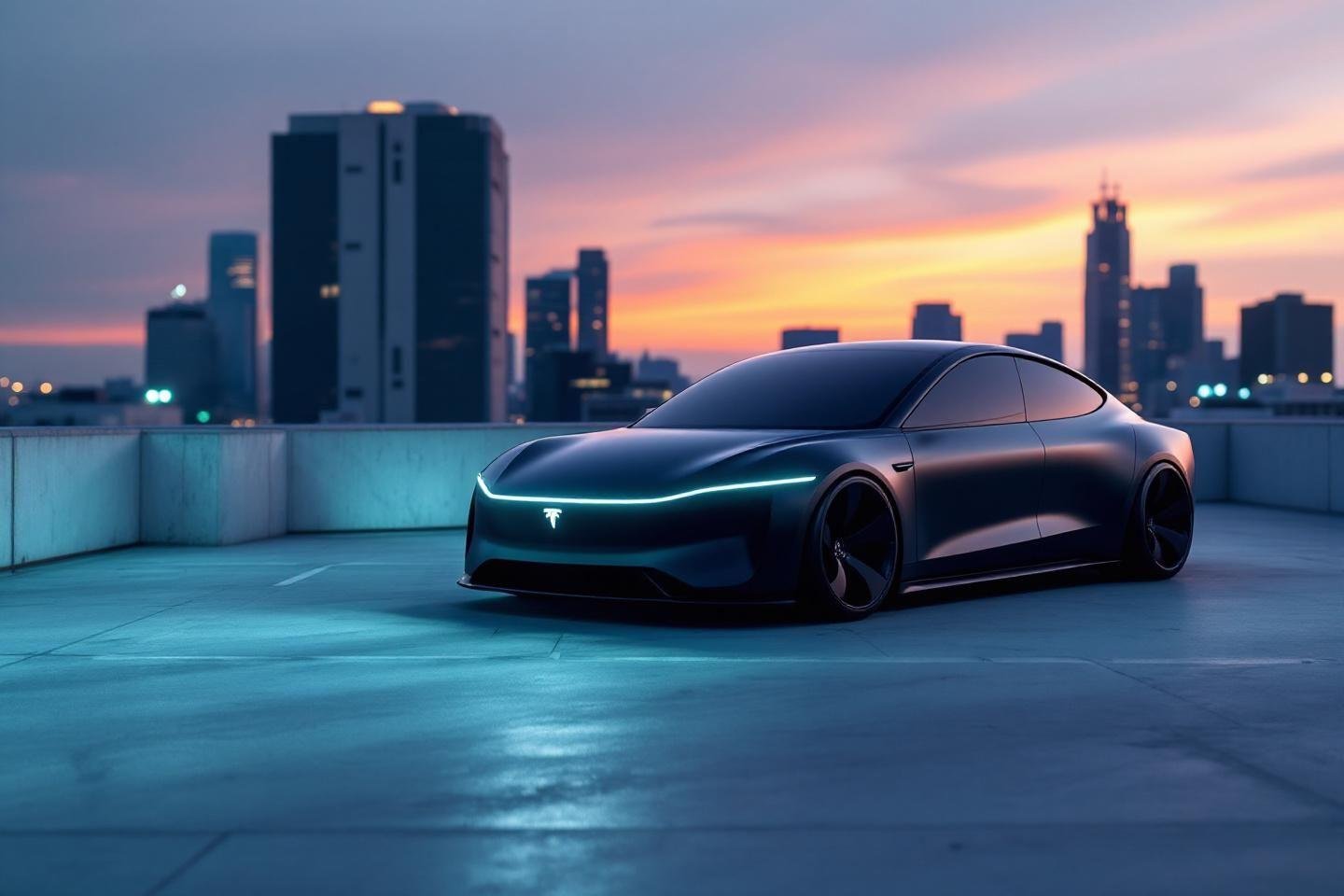
The automotive landscape is witnessing an unexpected shift as Honda challenges the electric vehicle orthodoxy that has dominated industry discourse. While competitors rush headlong into battery-powered futures, this Japanese manufacturer has openly questioned whether all-electric mobility represents the sole pathway to environmental responsibility. The brand’s recent strategic pivot underscores a fundamental debate about technological diversity in transportation’s evolution.
Why Honda is betting on technological diversity instead of pure electrification
The manufacturer has made a dramatic statement by reducing its electric vehicle budget by 30%, slashing approximately 3,000 billion yen from its original 10,000 billion allocation. More significantly, the ambitious target promising that 30% of global sales would be fully electric by 2030 has quietly vanished from official communications. According to Jay Joseph, who leads Honda Australia, the company views battery technology as merely one avenue among several, rather than the ultimate destination.
This recalibration doesn’t signal abandonment of electrification altogether. Honda continues manufacturing and selling electrified models across multiple markets. However, the strategic repositioning reflects concerns about infrastructure limitations and market readiness. Charging networks remain patchy across numerous territories, creating practical barriers for consumers considering electric adoption. The uneven distribution of charging stations particularly affects regions outside major urban centers, where range anxiety remains a legitimate concern for potential buyers.
Robert Thorp, Managing Director for Automotive at Honda Australia, emphasizes that hybrid technology currently resonates more strongly with consumer preferences. Despite the momentum behind pure electric vehicles, hybrid powertrains offer a pragmatic compromise between environmental consciousness and operational flexibility. This observation holds particularly true across Asian markets and North America, where driving patterns and infrastructure development favor multi-fuel capability over single-source energy dependence.
Hydrogen fuel cells emerge as strategic alternative
Beyond conventional hybrids, Honda is investing substantially in hydrogen fuel cell technology. The recently introduced CR-V e :FCEV exemplifies this commitment, integrating a 17.7 kWh battery with hydrogen fuel cell capability. This dual-system approach provides approximately 47 kilometers of pure electric range while maintaining hydrogen-powered extended mobility. The model demonstrates how different energy sources can coexist within a single platform, offering flexibility based on availability and circumstance.
This hydrogen strategy aligns Honda with manufacturers like Toyota, Hyundai, and BMW, the latter announcing a fuel cell model scheduled for 2028 release. These companies recognize that battery limitations in weight, charging time, and resource availability necessitate exploring complementary solutions. Hydrogen offers distinct advantages in specific applications, particularly for longer distances and heavier vehicles where battery weight becomes prohibitive.
The brand is also exploring internal combustion engines adapted for hydrogen or synthetic fuels. This approach, shared with Toyota, Mazda, and Subaru, could extend the lifespan of refined engine technology while achieving carbon neutrality. These manufacturers are testing units capable of running on liquid hydrogen or advanced biofuels, potentially transforming existing manufacturing capabilities rather than completely replacing them.
| Technology | Primary advantage | Main limitation |
|---|---|---|
| Battery electric | Zero direct emissions | Charging infrastructure gaps |
| Hydrogen fuel cells | Rapid refueling, extended range | Limited station network (1,160 globally) |
| Hybrid systems | Flexibility, no range anxiety | Still requires fossil fuels |
| Synthetic fuels | Uses existing infrastructure | High production costs |
Infrastructure reality constrains alternative fuel adoption
Despite theoretical advantages, hydrogen infrastructure remains severely underdeveloped. By late 2024, only 1,160 hydrogen stations operated worldwide, concentrated predominantly in Japan, South Korea, and California. This concentration creates geographic limitations that restrict hydrogen vehicles to specific markets, undermining their viability as universal solutions. The chicken-and-egg dilemma persists : consumers hesitate without stations, while investors question station construction without vehicle adoption.
Synthetic fuels face similar challenges despite different constraints. Production remains experimental and economically unviable at scale. Manufacturing carbon-neutral synthetic fuels requires substantial energy input, often negating environmental benefits unless powered by renewable sources. Current production costs far exceed conventional petroleum prices, preventing mass-market accessibility. Until production scales dramatically and costs decrease substantially, synthetic fuels remain niche solutions rather than mainstream alternatives.
Meanwhile, electric vehicle adoption accelerates regardless of Honda’s strategic pivot. Pure electric models now represent :
- Over 20% of the global automotive market
- 17.5% of European registrations through the first half of 2025
- Rapidly growing segments in China and North America
- Increasing model diversity across price ranges
Market dynamics favor pragmatic technology mixing
Honda’s position reflects realistic assessment of consumer behavior and infrastructure development rather than technological pessimism. While acknowledging electric vehicle growth, the manufacturer argues that diverse solutions better serve varied consumer needs and geographic contexts. Different regions face distinct challenges regarding energy availability, climate conditions, and infrastructure maturity, suggesting that universal solutions may prove inefficient.
This approach distinguishes Honda within an industry largely committed to battery electrification as the primary decarbonization pathway. The strategy reopens fundamental questions about whether technology monoculture serves environmental goals optimally. By maintaining multiple development paths simultaneously, Honda hedges against uncertainty while potentially offering more appropriate solutions for specific markets or applications.
The broader implications extend beyond Honda’s strategic calculations. If infrastructure development continues lagging behind vehicle capability, or if battery technology faces resource constraints or recycling challenges, alternative pathways may gain renewed relevance. Honda’s repositioning suggests that the conversation about automotive futures remains more open than industry consensus might suggest, with practical considerations potentially outweighing technological enthusiasm.