
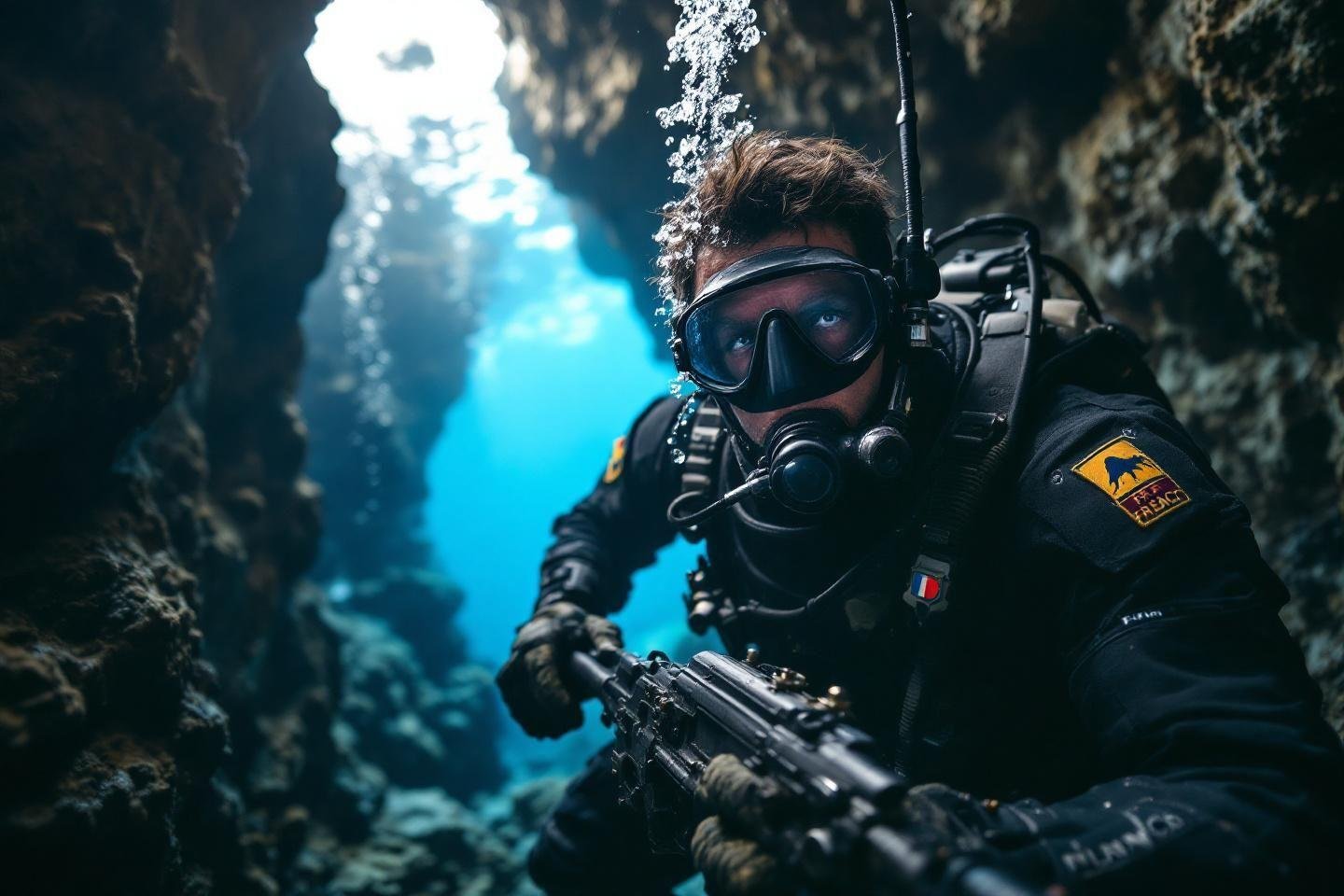
Maritime exploration reaches unprecedented depths as naval forces achieve what many considered impossible until recently. French military divers and researchers collaborated to locate a Renaissance-era trading ship resting at extraordinary depths beneath Mediterranean waves. The vessel, lying dormant approximately 2,567 meters underwater near the Saint-Tropez coastline, establishes a new benchmark for underwater archaeological discoveries within territorial waters. This exceptional find provides scholars with invaluable data about commercial activities during the 16th century, when maritime trade shaped European economies and cultural exchanges across the Mediterranean basin.
The merchant ship, temporarily identified as Camarat 4 following regional coastal landmarks, measures nearly 98 feet in length. Extreme environmental conditions at these depths created optimal preservation circumstances where biological decay processes virtually ceased. Unlike shallow-water wrecks exposed to destructive marine organisms and currents, this vessel remained protected by crushing pressure, frigid temperatures, and complete absence of natural light for approximately five centuries.
Une révolution technologique pour l’archéologie sous-marine
France’s Department of Underwater Archaeological Research deployed revolutionary robotic systems equipped with sophisticated imaging capabilities to document this historic vessel. These remotely operated vehicles feature advanced 4K cameras, three-dimensional mapping technologies, and precision robotic manipulators designed to function under immense pressure. Operating at such depths presents challenges comparable to extraterrestrial exploration, where atmospheric pressure exceeds normal conditions by more than 250 times.
The technological achievement demonstrates France’s leadership in maritime innovation, maintaining a significant portion of global specialized equipment essential for underwater operations. These same cutting-edge exploration techniques enable researchers to investigate other extreme environments, from Antarctic ice shelves to abyssal ocean trenches. The expedition showcases how modern engineering transforms previously inaccessible historical sites into viable research subjects, expanding humanity’s understanding of maritime heritage.
Scientists employed similar advanced methodologies when examining unusual biological specimens discovered beneath frozen Antarctic waters at comparable depths. This technological cross-pollination between different scientific disciplines accelerates discoveries across multiple fields, from marine biology to historical archaeology. For those interested in remarkable underwater discoveries, this prehistoric time capsule found underwater represents another fascinating example of preservation beneath the waves.
Trésors Renaissance révélant des réseaux commerciaux sophistiqués
Archaeological examination revealed nearly 200 ceramic vessels preserved within the cargo hold, many displaying intricate floral decorations, religious crosses, and the sacred monogram IHS. These artifacts provide researchers with extraordinary insights into spiritual beliefs and artistic traditions flourishing during the Renaissance period. The combination of religious symbolism and commercial goods illustrates how faith and commerce intertwined in 16th-century Mediterranean society.
The vessel’s cargo manifest demonstrates the diversity of goods transported across Renaissance trade routes :
- Iron bars carefully wrapped in protective plant fibers to prevent saltwater corrosion
- Ornate dishware and decorative serving vessels crafted for wealthy households
- A remarkably preserved bronze cannon showcasing military technology
- Complete anchor assemblies with original rope rigging intact
- Navigation instruments and commercial trading implements
Iron represented a strategic commodity during this era, comparable to how rare earth minerals drive modern economies. Renaissance merchants transported these essential materials with sophisticated preservation techniques, demonstrating advanced understanding of maritime logistics. The plant fiber wrapping protecting iron goods from corrosion reveals practical knowledge accumulated through generations of seafaring experience.
| Depth measurement | Geographic location | Vessel classification | Year discovered |
|---|---|---|---|
| 8,421 feet | Mediterranean Sea (France) | 16th-century merchant vessel | 2024 |
| 22,621 feet | Philippine Sea | USS Samuel B. Roberts | 2022 |
While Camarat 4 establishes France’s national depth record, explorer Victor Vescovo previously located the world’s deepest shipwreck, the USS Samuel B. Roberts, resting at 22,621 feet in Pacific waters. This World War II destroyer now serves as a protected underwater memorial, honoring naval personnel who served during global conflicts.
Menaces environnementales pesant sur le patrimoine submergé
Despite the remote location and extreme depth, researchers discovered troubling evidence of modern pollution surrounding the historic wreck site. Plastic debris, abandoned fishing equipment, and aluminum containers contaminate even these isolated depths, demonstrating humanity’s environmental footprint reaches virtually every ocean location. The observations parallel environmental concerns affecting other exploration activities, from reduced performance of modern vehicles in extreme conditions to plastic contamination documented in the deepest ocean trenches.
The absence of wood-consuming marine organisms at these depths created ideal preservation conditions for Camarat 4. Minimal biological activity allowed the vessel to survive intact, functioning as an extraordinary time capsule from Renaissance maritime history. This natural preservation contrasts sharply with shallow-water archaeological sites where biological decay rapidly destroys wooden structures.
Perspectives futures pour la recherche archéologique maritime
Future expeditions will employ advanced robotic systems to recover selected artifacts for comprehensive laboratory analysis. The extensive three-dimensional mapping data collected during initial exploration will support decades of scholarly research into Mediterranean commerce, naval construction methods, and cultural exchange patterns during the Renaissance period. Each recovered artifact undergoes meticulous documentation and preservation treatment to ensure long-term scientific value.
This groundbreaking discovery illustrates how technological innovation enables exploration of previously inaccessible historical locations, expanding knowledge of human maritime heritage. The comprehensive imagery captured by remotely operated vehicles provides researchers worldwide with detailed visual documentation, facilitating collaborative studies across international academic institutions. As preservation techniques advance, scholars continue developing new methodologies for protecting underwater archaeological treasures while making them accessible for educational purposes.