
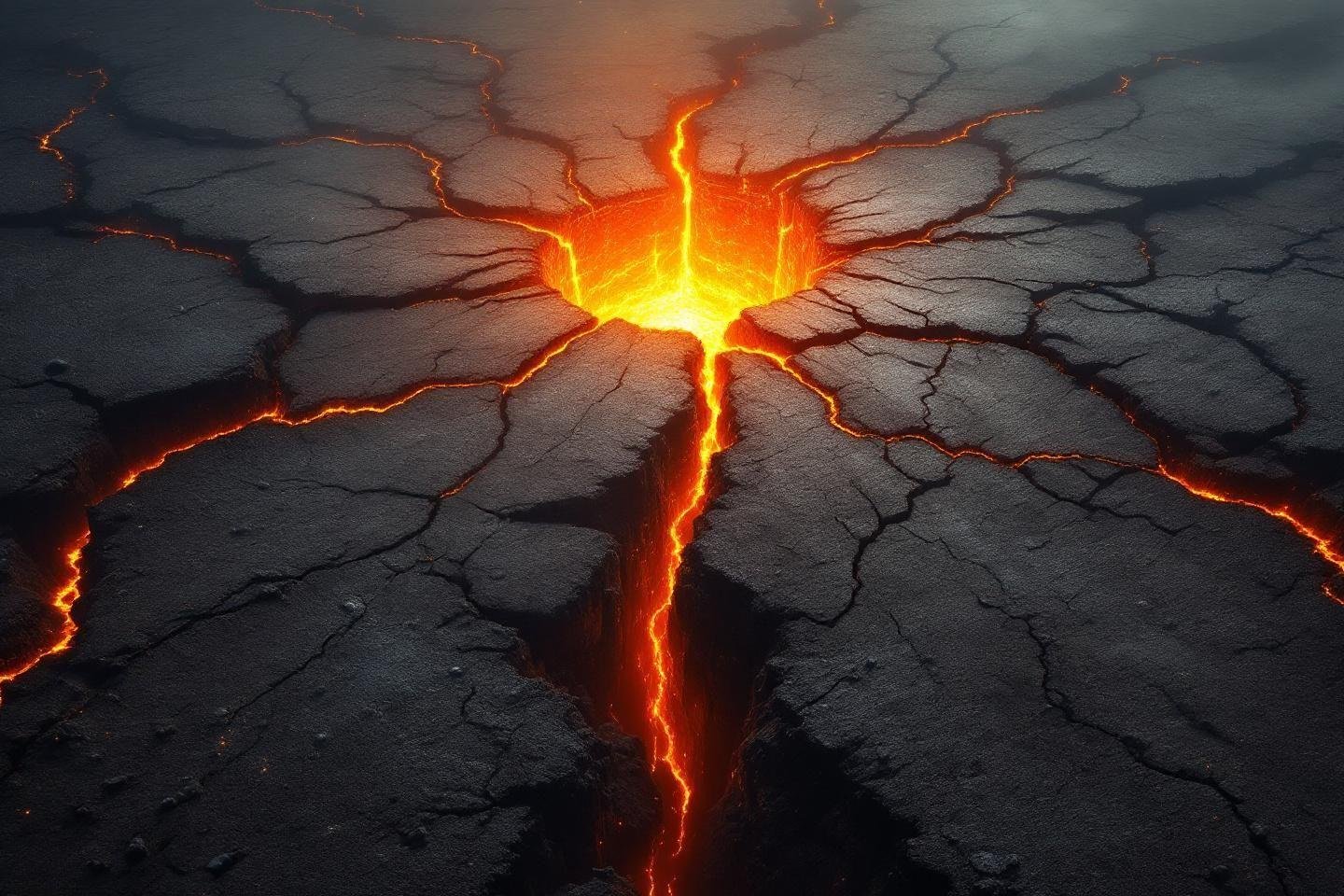
Eastern Africa witnesses an unprecedented geological transformation where massive tectonic forces are actively reshaping the continent. Three enormous plates converge in this region, creating fractures that scientists believe will eventually separate a portion of Africa from the mainland. This natural phenomenon unfolds across thousands of kilometers, offering researchers a unique opportunity to observe continental breakup processes in real time.
Geological forces driving continental separation
The Somalian, African, and Arabian plates meet at a critical junction, where continuous tectonic movements generate enormous stress within the Earth’s crust. Each year, these massive rock formations drift apart by several millimeters, a process that might seem insignificant but accumulates dramatically over geological timescales. The continental crust responds to this stretching by thinning progressively, similar to how dough stretches when pulled from opposite ends.
Professor Gilles Chazot from the University of Western Brittany emphasizes that oceans emerge when continents fracture and separate. This fundamental mechanism has operated throughout planetary history, creating major ocean basins like the Atlantic and Indian Oceans. The East African region provides scientists with a natural laboratory where they can study these processes from inception to eventual oceanic formation.
Mantle plume activity beneath the region drives significant heat flow upward, contributing to volcanic activity and crustal weakening. Regional stress patterns from plate boundary interactions amplify these effects, while pre-existing geological weaknesses focus deformation along specific zones. The combination of these factors creates ideal conditions for continental rifting to progress toward complete separation.
| Geographic zone | Separation velocity | Notable characteristics |
|---|---|---|
| Afar Triangle | 15-20 mm annually | Active volcanism, salt formations |
| Ethiopian Highlands | 5-10 mm annually | Plateau elevation, rift margins |
| Kenya Rift | 2-5 mm annually | Lake networks, volcanic features |
Visible evidence across the rift valley system
Extending more than 6,000 kilometers from north to south, this colossal depression showcases Earth’s dynamic nature through dramatic topographical features. Deep valleys bordered by towering volcanic peaks, including Mount Kilimanjaro, illustrate 25 million years of geological evolution. The landscape provides tangible evidence of how planetary surfaces transform under tectonic forces.
The Afar region stands as a particularly significant observation point where continental rifting transitions into oceanic spreading. Researchers document this critical transformation zone where seawater may eventually flood the deepening depression. Intense geological activity characterizes this area, with frequent seismic events and volcanic eruptions marking the active separation process. Understanding such geological changes helps address broader environmental challenges, much like how regions such as Cape Town battles water scarcity and social tensions in response to environmental pressures.
Ancient volcanic activity shaped the dramatic scenery visible today, while ongoing plate movements continue modifying terrain features. Scientists utilize this region to comprehend how continents divide and new ocean basins emerge, making it invaluable for geological research advancement. The system demonstrates how tectonic movements sculpt continents across vast timescales.
Accelerated timeline revealed by recent seismic activity
The 2005 Ethiopian seismic events revolutionized scientific understanding of rifting timescales dramatically. A 60-kilometer fissure opened within minutes, with ground separating by two meters almost instantaneously. This extraordinary event, which traditional models predicted would require centuries, suggests that continental breakup might occur faster than previously estimated by geological research.
Modern monitoring techniques enable scientists to track crustal movements with unprecedented accuracy and detail. Satellite measurements, seismic networks, and GPS stations deliver continuous data about tectonic shifts, helping researchers understand complex interactions driving continental separation. These technological advances reveal patterns and processes invisible to earlier generations of geologists.
Key elements influencing the rifting process include :
- Thermal energy transfer from mantle plumes creating upward pressure
- Stress accumulation patterns resulting from plate boundary forces
- Crustal composition variations affecting structural strength and behavior
- Pre-existing geological weaknesses concentrating deformation zones
Future transformation of East African geography
Scientists project that the emerging ocean basin will stretch from the Afar region through Kenya, potentially reaching Tanzania’s northern territories. This massive water body will transform the Horn of Africa into a substantial island, fundamentally altering continental geography and affecting regional climate patterns significantly. The transformation follows established patterns observed in other ocean basins worldwide.
As continental rifting advances, the crust continues thinning until volcanic activity generates new oceanic crust material. Eventually, seawater will flood the depression, establishing a permanent marine environment that expands over geological time. This process mirrors how other major oceans formed throughout Earth’s geological history, providing insights applicable to planetary science research.
The ongoing transformation captivates the global scientific community while revealing new insights about our planet’s dynamic mechanisms. Understanding these processes contributes to broader knowledge about how rocky planets evolve, offering perspectives that extend beyond terrestrial geology. This natural phenomenon demonstrates that our planet remains geologically active, continuously reshaping its surface through powerful internal forces that operate across millennia.