
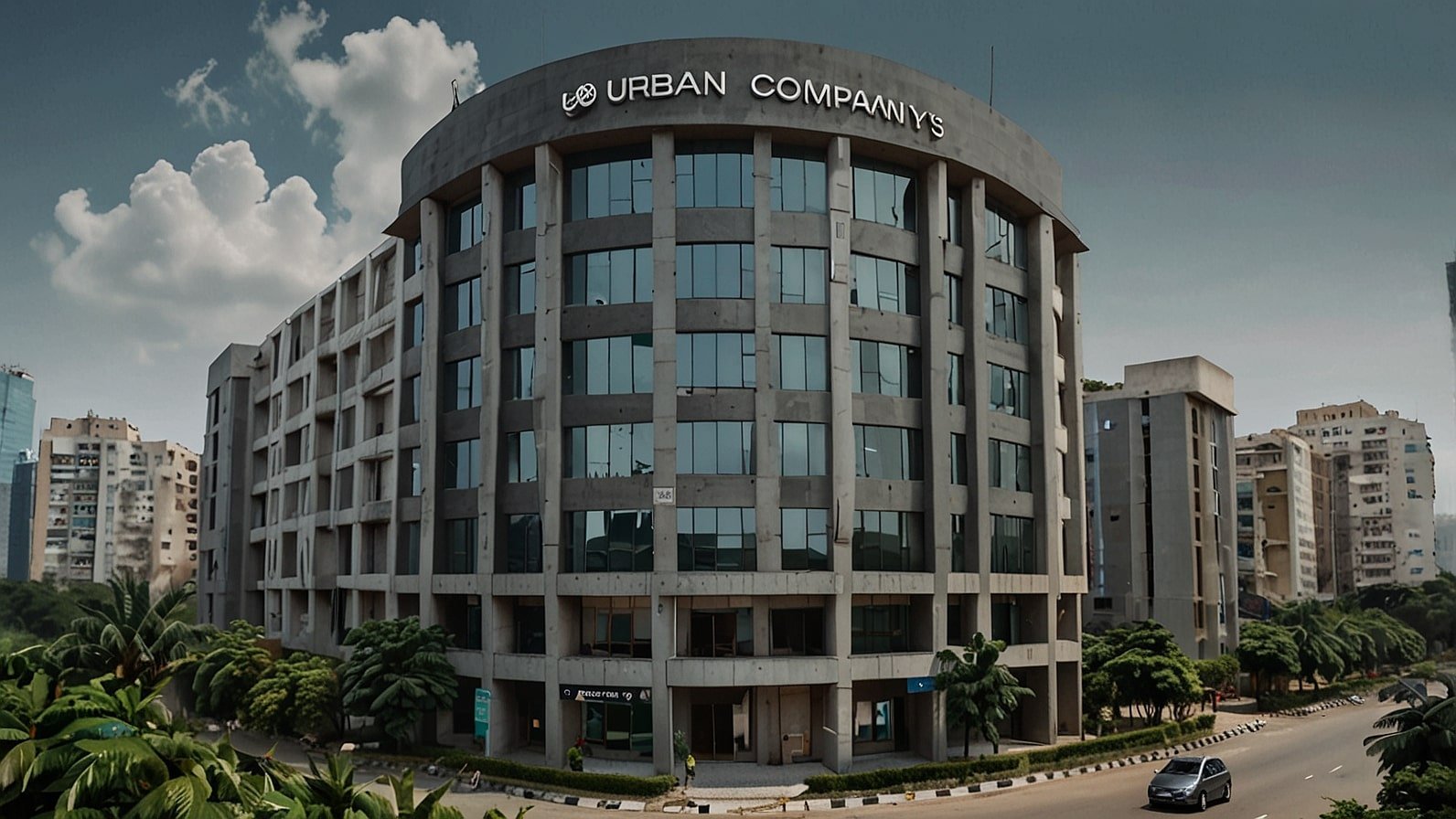
Urban Company, which is the largest home services platform, has today, 16th September 2025, allotted the initial public offering (IPO) shares that have been much-awaited by the Indian market in an important move towards its growing gig economy industry. This is only a day after the company shares will be introduced on the National Stock Exchange (NSE) and Bombay Stock Exchange (BSE) on September 17.
With an approximate valuation of ₹ 1,900 crore, the IPO has generated enthusiasm among investors, being oversubscribed 103.6 times, which is an indication of strong trust in Urban Company’s growth path in a market that is slowly regaining its appetite for listing startups. With refunds to the unsuccessful bidders starting today, and the shares being credited to demat accounts, the focus is on what may be a blockbuster listing with grey market premiums leading to an anticipated 50 per cent premium on the debut.
The trip of Urban Company to the stock market has been a subject of close observation, particularly since it is one of the first significant IPOs in the field of on-demand services since the recovery after the pandemic. The company was established in 2014 under the name UrbanClap and reformed in 2020 to match millions of customers with verified professionals, providing services such as plumbing, beauty, home cleaning, and repairs.
With operations in India spanning more than 60 cities and an international presence in the UAE, Singapore, and Australia, Urban Company boasts over 80,000 service partners. The success of the IPO highlights how the platform economy has endured despite economic headwinds such as inflation and regulatory reviews that have brought down most startups.
IPO Allotment Finalised: Key Timeline and Process
The registration of the IPO of Urban Company was done today, namely, on September 16, 2025, by the registrar, MUFG Intime India, after a three-day period of subscription, which ceased on September 12. It is an important step because it will decide on which investors will obtain shares and in what amount, depending on the oversubscription levels of the retail and non-institutional investors (NII) and qualified institutional buyers (QIB).
The retail investors by far were the biggest beneficiaries as their share was subscribed 25 times, whereas the majority of the subscriptions were through QIBs of more than 150 times. The fact that the company has chosen to offer the IPO at a range of 92 to 103 per share, with 103 being the maximum price, has played a key role towards attracting a wide range of investors.
Refunds to those who were not allotted are being processed since today, and are likely to be credited into bank accounts within two days. Allottees who are successful will have the shares credited to their demat accounts by the morning of September 17, which will lead to the trading starting at 10:00 AM.
This is an effective timescale that depicts the regulatory system established by the Securities and Exchange Board of India (SEBI), which has played a crucial role in simplifying the IPO procedure to enhance market liquidity. In the case of Urban Company, this allocation should not only legitimise its business concept, but also precondition the increase of new capital to drive growth, such as investments in technology, training of partners, and even expanding to new markets.
Allotment position has been a hot subject among investors, and the online platforms are filled with questions on how to confirm holdings. The IPO of Urban Company was pegged on the presence of marquee investors such as Prosus, Tiger Global and SoftBank, who have a huge portion of stakes to play, and it gives the company credibility.
The new problem item of 1,000 crore will serve inorganic growth and working capital, and the offer for sale (OFS) of 900 crore will enable early investors to take part in the business partially and balance the liquidity demand on both ends.
Subscription Surge: A Testament to Investor Confidence
The figures of subscription in the IPO give an impression of excessive demand, as the issue was subscribed to 103.6 times in total. The degree of excitement is even more notable considering the restrained market climate in which the international uncertainty, such as geopolitical tension and changes in interest rates, has dampened IPOs.
Large institutions qualified as QIB subscribed 150 times, which is a huge number considering the support of mutual funds and foreign portfolio investors that view Urban Company as a proxy of the digital services boom in India.
Retail interest was also quite impressive, with individual investors scrambling to the issue 25 times the quota, as encouraged by the familiar brand of the company, and consistent revenue growth. The high-net-worth individuals, along with other non-institutional investors, raised an 80-fold subscription in their category.
These are not common to a company operating in the gig economy sector, where profitability is still in its infancy. Urban Company received a net loss of 164 crore in FY24, but its revenue surged 33% to 2,540 crore, which is a sign of scalable operations and unit economics focus.
This success in subscriptions can be explained by a number of factors. To start with, the timing is consistent with an IPO pipeline resurgence in India, following high-profile IPOs such as Zomato and Nykaa. Second, the focus on the welfare of partners, such as the provision of insurance, skill development, and competitive compensation, which Urban Company places, appeals to the socially oriented investors.
Third, the technology-based strategy of the platform, with the use of AI to match and control quality, also makes it superior to its competitors, such as Housejoy and NoBroker. The way the IPO was structured, with 50 per cent to QIBs and 35 per cent to retail, guaranteed that the participation was broad so that the risks of cornering by the large players were not as significant, according to analysts.
Grey Market Premium: Signals of a Premium Listing
To make the matter interesting, the current grey market premium (GMP) of Urban Company shares was 52-54, which would mean that the listing price would be approximately 155-157, or 50 per cent above the issue price of 103.
Although it is not official, GMP is a gauge of market sentiment and has been steadily increasing since the time the subscription opened. It was within the range of [?]40 at the beginning of the week, and then bidding led to higher values, indicating the desire of unallotted investors to put in a premium in the secondary market.
It is expected to make a debut gain of 40-50 per cent, and the company might be valued at more than 14,000 crore on the listing day. This hope is driven by similar counterparts: Zomato was IPOing with a 53 per cent premium in 2021, and the recent IPO of Swiggy was not a big win but highlighted the potential of the sector.
Nevertheless, analysts warn that post-listing volatility may be caused by the expiry of the lock-in periods by promoters and the general market sentiment. The GMP trend of Urban Company updated several times today indicates the continuing interest, and the trading of the unlisted shares is in Mumbai and Delhi circles.
How Investors Can Check Allotment Status Online
For those impatiently waiting to receive confirmation, it is easy to check the Urban Company IPO allotment status, which can be accessed through various channels. The main option is via the registrar’s website, i.e., at www.intime.co.in, where investors must choose the ‘Urban Company IPO’ from the dropdown menu, enter their PAN number, and submit to view the details. Alternatively, you can use the NSE portal and the BSE portal, available on nseindia.com or bseindia.com, where you can enter your application number or PAN to check the status under the IPO segment.
Demat account holders also have access to the platform of their broker, including Zerodha, Groww, or Angel One, to check whether they have received shares after allotment. To the users of UPI in applications, it is an integrated process where a notification is sent through email or SMS.
Some retail investors might get allotments that are less than the applied share based on high subscription. The registrar has promised to keep the list up to date, and the entire list will be available by night. This online access shows how the requirements of SEBI have made investment in India a democratic process.
Listing Expectations and Market Impact
The listing of Urban Company on September 17 will be a test of the valuation of Urban Company and the startup ecosystem as a whole. At the top price band with a market cap of approximately 11,000 crore, the company can experience a valuation of 16,500 crore, should GMP last. The symbols will trade as URBN on both NSE and BSE, and the lot size will be 145 shares. Experts predict an opening bell premium; however, this should be cautioned due to possible profit booking.
The success of the IPO might help clear the pipeline of other unicorns, such as Blinkit and Meesho, which the global community might take as an indication that the consumer technology market in India is ready to go public.
The aspect of sustainable growth, which Urban Company prioritises in its vision of positivity of EBITDA in FY26, is consistent with the long-term plays that the investors prefer. Its case is also supported by regulatory nods such as data privacy compliance.
This listing is also indicative of a shift in labour relations in the environment of the gig economy, and Urban Company promotes the reform in the classification of partners. It may jumpstart policy debates on the rights of platform workers as shares go to the exchanges.
Broader Implications for India’s Startup Landscape
The IPO of Urban Company is not just a company event, but it is a hope in the eyes of the Indian startup ecosystem, which is worth 400 billion dollars. The company enjoys the benefits of setting the example by going through the rigorous requirements of SEBI concerning disclosures and governance.
It focuses on hyper-local services, which appeal to the aspirational middle classes of urban India, estimated to be 500 million by 2030. Economically, the revenues will increase AI opportunities in predictive maintenance, and also open up to the tier-2 cities, which could accommodate 20,000 partners per year.
The issues persist, such as the competition with the informal sectors and reliance on consumption in the cities. However, Urban Company is in a good position with 70% gross margins and a CAGR of 25% when it comes to orders. The listing may trigger a 20-30 IPO deluge in 2026, as industry estimates suggest, to boost morale after a two-year hiatus.
To sum it up, the day in the history of Urban Company is September 16, 2025, when the company opens its doors to the public. The hope of this homegrown success story can be encapsulated by the investor checking the allotments today and preparing to trade tomorrow.
Urban Company may transform the scope of the service-based economy in India with strong fundamentals and market tailwinds, creating potential to be discovered with the debut of Urban Company, which will support innovation and employment of millions of people.