
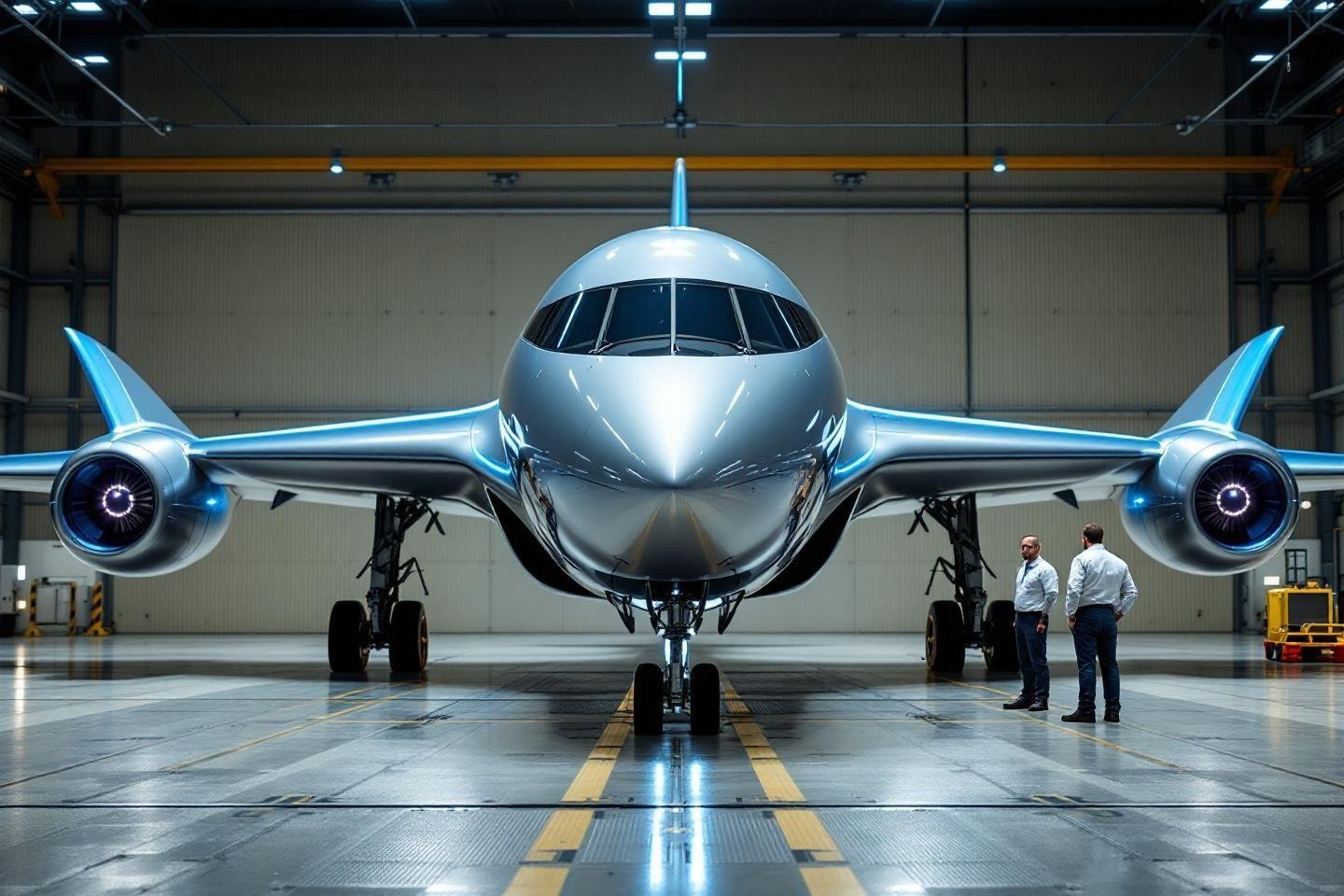
The aerospace sector faces unprecedented challenges in transitioning toward sustainable propulsion systems. American researchers have recently achieved a significant breakthrough by creating an integrated approach that simultaneously resolves three major technical barriers hampering hydrogen-powered aircraft development. This innovation marks a decisive step forward in making clean aviation a practical reality rather than a distant aspiration.
Aviation currently contributes approximately two percent to worldwide carbon dioxide emissions according to IPCC data. The urgency to develop viable alternatives has intensified as environmental concerns mount. Hydrogen emerges as the most promising candidate due to its exceptional energy density and zero-emission combustion properties. However, storing this element at cryogenic temperatures below minus 253 degrees Celsius presented formidable engineering obstacles until now.
Un système sans pompes mécaniques révolutionne l’architecture des aéronefs
Traditional hydrogen aircraft designs relied heavily on mechanical pumping systems to distribute fuel throughout the airframe. These components introduced significant weight penalties and multiple potential failure points. Engineers at the FAMU-FSU College of Engineering adopted a radically different approach by eliminating pumps entirely from their revolutionary design.
The new architecture exploits natural reservoir pressure dynamics to manage hydrogen flow without mechanical intervention. Through carefully controlled gas injection and evacuation processes, the system maintains optimal delivery rates during all flight phases. This pressure-driven methodology reduces mechanical complexity by approximately forty percent compared to conventional configurations.
Extensive simulation testing validated the pump-free design’s capacity to sustain operations during energy-intensive periods. The system delivers up to 0.25 kilograms of hydrogen per second, generating 16.2 megawatts during peak demand scenarios. This output meets requirements for next-generation hybrid-electric aircraft designed to transport one hundred passengers on commercial routes.
| Design Parameter | Conventional Systems | Integrated Solution |
|---|---|---|
| Mechanical pumps required | Yes | No |
| Gravimetric efficiency | 40-50% | 62% |
| Peak power output | 12-14 MW | 16.2 MW |
| Cooling system integration | Separate units | Fully integrated |
Eliminating pumps substantially enhances reliability while reducing noise and vibration that typically affect passenger comfort and structural integrity. This simplification represents a philosophical shift toward elegant engineering solutions that prioritize effectiveness over traditional mechanical complexity. The approach demonstrates how innovative thinking can overcome obstacles that seemed insurmountable using conventional methods.
Une gestion thermique intelligente transforme un défi en avantage
Electric propulsion systems generate considerable heat during operation, requiring dedicated cooling mechanisms to maintain performance and prevent component degradation. The American research team recognized an opportunity to address two problems simultaneously through strategic thermal management integration. Their solution uses the cryogenic hydrogen itself as a cooling medium before combustion.
As liquid hydrogen travels through strategically positioned heat exchangers, it absorbs excess thermal energy from motors, power cables, and electronic components. This absorption process naturally warms the hydrogen to temperatures suitable for fuel cells and turbines. The elegance lies in achieving dual benefits without additional energy expenditure or control complexity.
This thermal integration eliminates separate cooling equipment that would otherwise add weight and maintenance requirements. The system operates passively throughout the flight envelope, from ground operations through cruise altitude conditions. Engineers carefully calibrated heat exchanger dimensions and flow parameters to maintain optimal temperatures regardless of external conditions or power demands.
The dual-purpose cooling approach represents a paradigm shift in aircraft thermal architecture. By transforming a technical challenge into a functional advantage, researchers demonstrated innovative problem-solving that characterizes breakthrough engineering. This methodology could influence future aircraft designs across multiple propulsion technologies beyond hydrogen applications alone.
Une efficacité gravimétrique exceptionnelle maximise les performances opérationnelles
Weight considerations dominate aircraft design decisions, as every kilogram carried reduces payload capacity or increases fuel consumption. The integrated system achieves a remarkable gravimetric index of 0.62, meaning sixty-two percent of total system mass consists of usable hydrogen. This performance substantially exceeds conventional systems burdened with auxiliary components and redundant subsystems.
Achieving this efficiency required meticulous optimization of numerous parameters including vent pressures, flow rates, and structural configurations. Each element underwent rigorous analysis to minimize dead weight while maintaining safety margins and operational reliability. The team employed advanced modeling techniques to predict performance across diverse flight scenarios and environmental conditions.
The system combines storage, distribution, and cooling functions into a unified architecture rather than separate modules. This integration eliminates redundant components and interfaces that traditionally added weight without contributing to primary functions. The streamlined design philosophy yielded unexpected benefits beyond weight reduction, including simplified maintenance procedures and enhanced fault tolerance.
Several key advantages emerge from this efficient architecture :
- Extended operational range through maximized usable fuel fraction
- Reduced structural requirements from lighter system weight
- Simplified manufacturing and assembly processes
- Lower lifecycle costs through decreased maintenance complexity
- Enhanced safety margins from redundant failure modes elimination
These improvements directly address commercial viability concerns that previously hindered hydrogen aviation development. Market analysts project the hydrogen aerospace sector could reach three hundred billion euros by 2050, assuming technical barriers continue falling at current rates.
Le soutien institutionnel accélère la transition vers l’aviation décarbonée
NASA’s Integrated Zero Emission Aviation program provides crucial backing for this revolutionary technology through collaborative partnerships. Georgia Tech, Illinois Institute of Technology, University of Tennessee, and University of Buffalo contribute specialized expertise to advance different aspects of hydrogen propulsion systems. This comprehensive approach addresses aviation’s environmental impact through coordinated research efforts.
The next development phase involves constructing a working prototype at FSU’s Center for Advanced Power Systems. Physical testing will validate computational predictions and reveal performance characteristics under realistic operational conditions. Researchers target commercial implementation within the coming decade, potentially transforming passenger aviation fundamentally.
The American breakthrough positions the United States as a potential leader in clean aviation technology. This advantage complements domestic resources including recently identified lithium deposits valued at trillions of dollars. While European manufacturers like Airbus postponed hydrogen aircraft programs from 2035 to 2040 timelines, American innovations continue advancing practical solutions toward market readiness.
The integrated storage system represents more than technical achievement; it demonstrates how creative engineering approaches can overcome seemingly intractable problems. By addressing storage, distribution, and cooling simultaneously rather than sequentially, researchers achieved synergies that eluded previous efforts. This breakthrough brings hydrogen-powered commercial aviation substantially closer to reality, offering genuine hope for sustainable air travel without compromising performance or economic viability.