
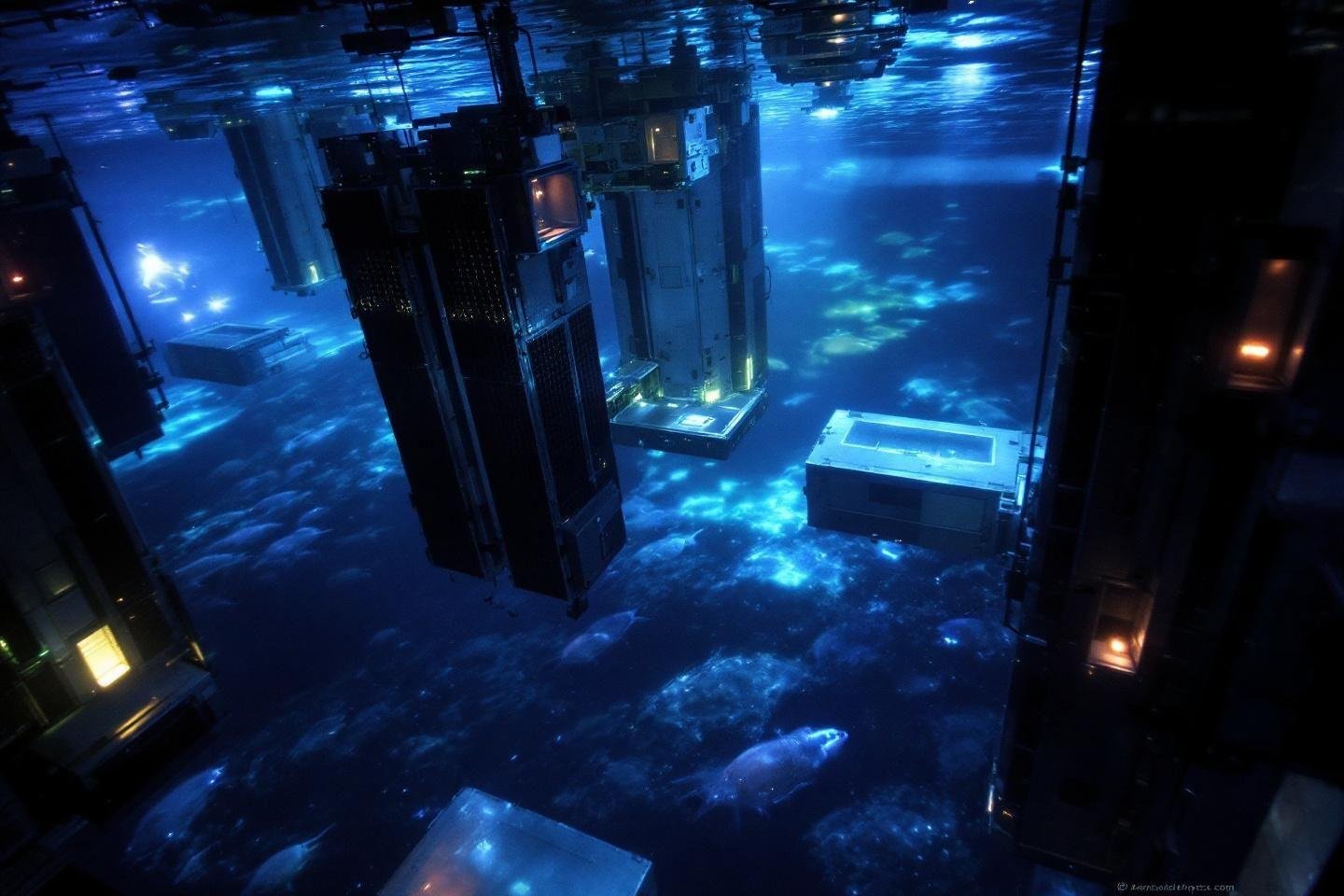
The South China Sea harbors untapped resources that could reshape global energy dynamics and scientific understanding of extreme environments. China’s ambitious underwater station project pushes technological boundaries by establishing a permanent facility at 2,000-meter depths, rivaling the complexity of three International Space Station modules. This pioneering installation marks a transformative moment in marine exploration, combining autonomous systems with sophisticated monitoring capabilities that operate continuously in one of Earth’s most challenging environments.
Scheduled for completion by 2030, this underwater infrastructure represents more than just engineering prowess. The Chinese Academy of Sciences has designed a facility capable of extracting valuable resources while conducting groundbreaking research in conditions that mirror outer space. Advanced life support systems enable extended missions without surface intervention, while a comprehensive network of sensors and communications equipment provides real-time operational control from land-based facilities.
Technological systems enabling permanent deep-sea presence
The underwater station incorporates cutting-edge equipment that functions autonomously in extreme pressure and darkness. Engineers developed specialized fiber optic networks that maintain constant communication between the seafloor facility and surface operations centers. This technological backbone supports a four-dimensional surveillance grid monitoring hydrothermal activity, tectonic movements, and ecological changes across vast underwater territories.
The facility operates alongside the drilling vessel Mengxiang, purpose-built to penetrate Earth’s mantle and collect samples from previously unreachable depths. Autonomous submarine fleets conduct continuous exploration missions, gathering data that flows instantly through the underwater network. These robotic vessels navigate independently, responding to programmed parameters while adapting to unexpected underwater conditions. The integration creates a permanent scientific presence that fundamentally alters how researchers study deep-sea phenomena.
Core operational technologies include :
- Autonomous navigation systems for unmanned submarine operations
- Real-time data transmission via advanced fiber optic infrastructure
- Long-duration life support for extended research missions
- Specialized drilling equipment reaching mantle depths
- Environmental monitoring sensors throughout operational zones
This technological integration mirrors advances observed in other maritime developments, demonstrating global trends toward sophisticated underwater capabilities. Similar technological sophistication appears in various naval projects worldwide, highlighting the rapid evolution of marine engineering and exploration systems.
Strategic mineral deposits and energy reserves driving exploration
The targeted region contains 70 billion tons of methane hydrates, representing energy reserves equivalent to half of China’s combined petroleum and natural gas deposits. These frozen methane compounds exist in stable form under intense pressure and cold temperatures, offering clean-burning fuel alternatives that could revolutionize energy independence. Extracting these resources sustainably requires precisely the technology this underwater station provides.
Beyond energy potential, the seafloor harbors exceptional concentrations of rare earth elements essential for modern technology manufacturing. Cobalt, nickel, and other critical minerals exist in densities three times higher than terrestrial mining sites. These materials prove indispensable for battery production, electronic components, and advanced military applications. The strategic importance of securing reliable access to these resources cannot be overstated.
| Resource category | Quantity available | Strategic application |
|---|---|---|
| Methane hydrates | 70 billion tons | Energy independence and clean fuel |
| Rare earth minerals | 3x terrestrial density | Technology manufacturing and defense |
| Hydrothermal deposits | Multiple active sites | Scientific research and industrial applications |
The facility employs sustainable extraction methodologies designed to minimize environmental disruption while maximizing resource recovery efficiency. Advanced monitoring systems track ecological indicators throughout extraction processes, ensuring responsible development practices. This approach balances economic imperatives with environmental stewardship, establishing protocols that could guide future underwater resource projects globally. Prehistoric time capsule found underwater discoveries demonstrate how careful exploration can yield extraordinary scientific insights while preserving fragile underwater environments.
Biodiversity hotspots offering medical and biotechnology breakthroughs
Hydrothermal vents in the project area create extraordinary biological environments supporting over 600 unique species adapted to extreme conditions. These organisms thrive in total darkness, crushing pressure, and chemical-rich waters that would instantly kill most life forms. Their survival mechanisms fascinate researchers seeking to understand evolutionary adaptation processes and develop revolutionary medical treatments.
Many vent species produce specialized enzymes with remarkable properties applicable to cancer treatment, industrial processes, and biotechnology innovations. The underwater station enables comprehensive study of these organisms without disturbing their delicate habitats. Scientists anticipate discovering additional species while unlocking biological secrets that could transform pharmaceutical development and environmental remediation technologies.
Environmental protection remains paramount throughout facility operations. Engineers integrated cutting-edge monitoring systems that continuously assess ecosystem health indicators, ensuring resource extraction activities maintain ecological balance. This careful approach preserves invaluable biological communities while advancing scientific knowledge and economic development objectives simultaneously.
International implications of advanced underwater capabilities
This unprecedented facility establishes new benchmarks for deep-sea exploration and resource extraction capabilities. China’s investment positions the nation as a leader in underwater technology development, challenging other countries to advance their marine exploration programs. The project’s success will likely influence worldwide strategies for accessing oceanic resources and conducting deep-sea research.
International observers closely monitor this development as they evaluate their own underwater exploration investments. Global race for plutonium mining sparks international debate about resource access and technological competition, paralleling concerns about underwater resource development. The facility demonstrates China’s commitment to advanced marine technology while securing access to critical materials.
The station’s operational success will fundamentally change how nations approach deep-sea exploration in coming decades. International collaboration and competition will intensify as underwater resources become increasingly important for economic security and technological advancement. This revolutionary facility marks a pivotal moment in humanity’s relationship with the ocean’s depths.